

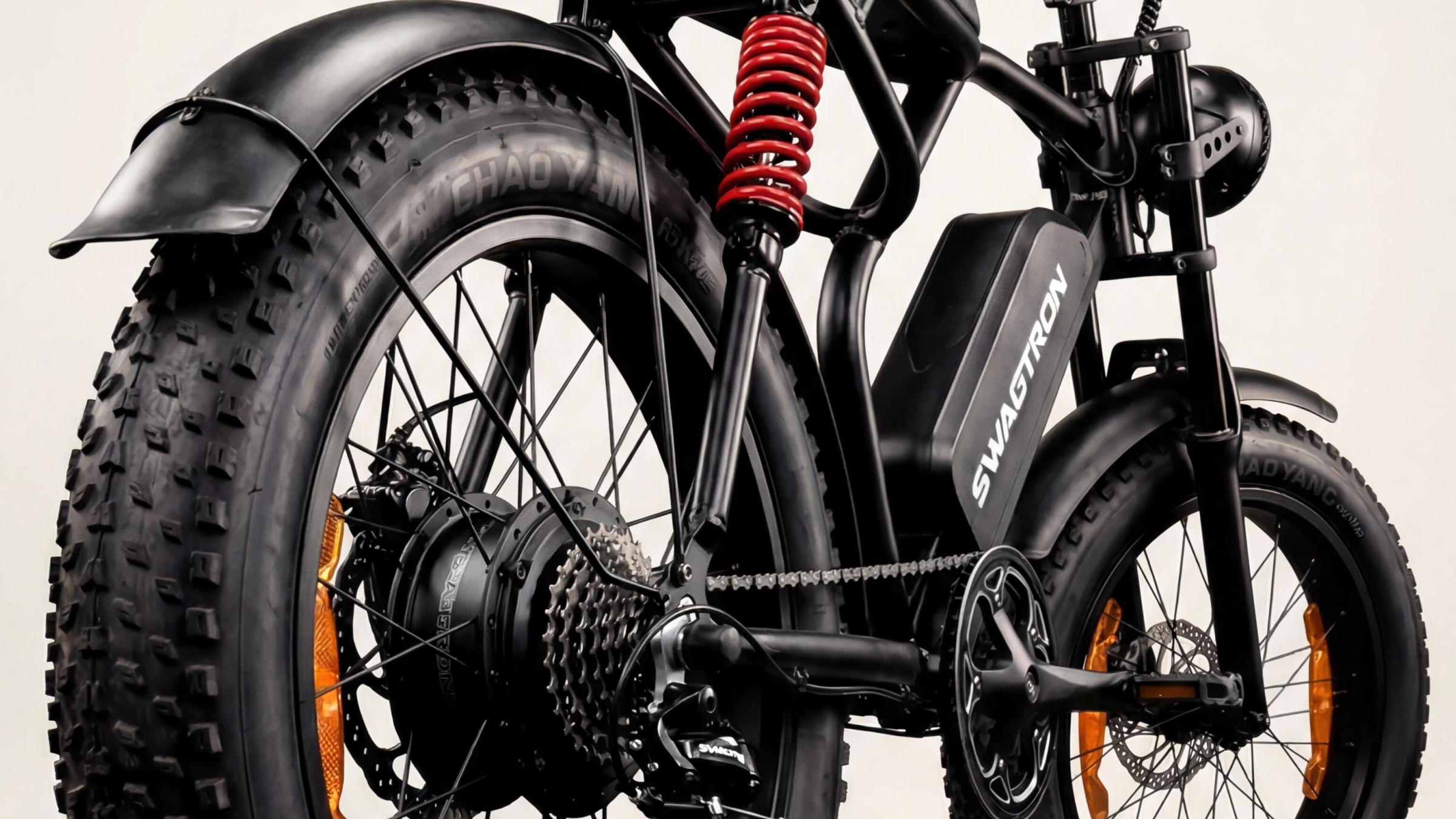
Light bike. Real charge. Apartment-elevator-friendly.
If you want a fat tire e-bike for apartments, you've already learned the math the hard way. Fat-tire e-bikes are built for power and grip — usually at the cost of weight. The typical fat-tire e-bike on the market today weighs between 73 and 80 pounds and rolls on 26-inch wheels. Most won't navigate a standard apartment elevator gracefully. Most can't be lifted onto a vehicle rack by one person. Most end up living in a storage unit instead of an apartment.
The SWAGTRON UrbanCruise was engineered to be the exception. At 62 pounds, it's tied for the lightest fat-tire e-bike in its active competitive set. And it gets there without gutting the battery: 749 watt-hours of charge and a claimed 60+ miles of range — more than a full day of riding — packed into a bike light enough to actually carry up the stairs.
The apartment elevator problem
A standard apartment-building elevator car is a tight box, and plenty of older buildings have even smaller ones. Wheeling a 75-pound fat-tire e-bike with 26-inch wheels into one is, at best, an exercise in awkward angles and apologetic shuffling. Tilting it up on its rear wheel to clear the door frame works in theory. Doing it twice a day, with groceries, after a long commute, is a different story.
Most fat-tire e-bikes ship with 26-inch wheels. The UrbanCruise ships with 20-inch wheels. The four-inch-wide knobby tires give you the same fat-tire capability — sand, snow, gravel, fire road — but the smaller diameter trims overall height, makes the bike easier to thread through doorways and hallways, and combines with the lighter overall weight to turn elevator-loading from a workout into a habit.
This isn't a quirk. It's an engineering decision aligned with the rider the bike is built for: someone who lives somewhere fat-tire e-bikes weren't really designed to go.
Why fat-tire e-bikes got heavy
The fat-tire category emerged as an answer to a specific problem: traditional commuter e-bikes felt nervous on rough roads, potholes, gravel, and the dirt-and-pavement transitions that define an actual city ride. Fat tires solved it. They float over surfaces that thinner tires struggle with. They add a real off-road option to a bike that would otherwise live entirely on pavement.
The trade-off was real. Fat tires pull extra weight — heavier rims, heavier rubber, heavier hubs to drive them. Bigger wheels add more. The batteries grew to feed the motors, and the frames thickened to handle the loads. By the time the category matured, the long-range fat-tire e-bikes were landing in the 73-to-80-pound range to carry their biggest battery packs.
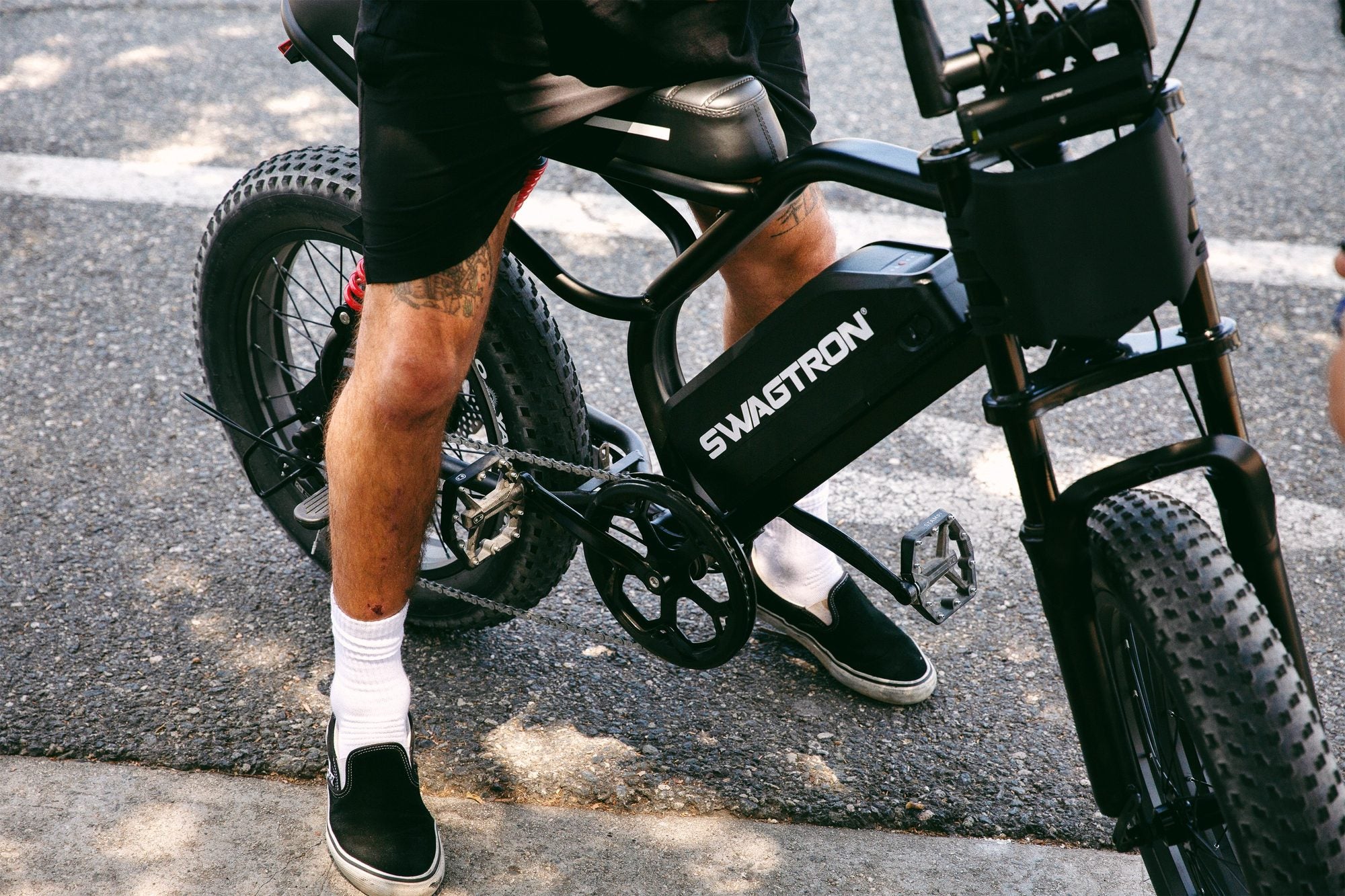
UrbanCruise reverses the assumption. Instead of accepting the weight that comes with a bigger wheel, the design uses a smaller 20-inch wheel with the same fat four-inch profile. You keep the floatation; you lose the diameter; the whole bike gets lighter. An aluminum alloy frame holds it together, and a removable 48V 15.6Ah pack — about 749 Wh — keeps the range honest without dragging the weight back up.
The lightweight fat tire e-bike math most brands won't show you
There's one number that captures the trade-off most fat-tire e-bike brands won't put on a spec sheet: charge capacity per pound of bike weight, in watt-hours per pound (Wh/lb). Higher means more range without more weight. Easier to lift. Easier to maneuver at low speed. Easier to live with.
Here's how the active competitive set stacks up:
| E-Bike | Charge (Wh) | Weight (lbs) | Wh/lb |
|---|---|---|---|
| SWAGTRON UrbanCruise | 749 | 62 | 12.1 |
| Himiway Zebra (D5) | 960 | 79 | 12.2 |
| Mokwheel Basalt 2.0 | 940 | 80 | 11.8 |
| Ride1Up Cafe Cruiser | 720 | 65 | 11.1 |
| Velotric Nomad 2 | 802 | 76 | 10.6 |
| Lectric XPeak 2.0 750 | 720 | 73 | 9.9 |
| Aventon Aventure.2 | 720 | 77 | 9.4 |
| Rad Power RadRunner 3 Plus | 672 | 76 | 8.8 |
| Heybike Mars 2.0 | 624 | 75 | 8.3 |
| Super73 ZX | 480 | 62 | 7.7 |
Read the table honestly and the picture is clear. A couple of heavyweight bikes — the Himiway Zebra at 79 pounds and the Mokwheel Basalt 2.0 at 80 — edge or trail UrbanCruise on the raw Wh/lb ratio, but they get there by hauling 17 more pounds of bike. That weight turns the elevator math right back into a problem.
The real comparison is among bikes light enough to actually carry up stairs. There, the picture is decisive. The Super73 ZX matches UrbanCruise's 62-pound weight exactly — but carries only 480 Wh, while UrbanCruise carries 749. That's over 1.5 times the charge at the same weight. Among bikes light enough to actually carry up stairs, nothing matches UrbanCruise's charge-to-weight.
What 62 pounds gets you in real life
The apartment elevator is the headline. The everyday wins are smaller, more frequent, and cumulatively decisive:
- Carrying the bike up a single flight of stairs is a one-person job, not a two-person operation.
- Lifting it onto a vehicle rack doesn't require a partner.
- Walking it up a curb at the end of a long ride feels like walking a regular bike, not a small motorcycle.
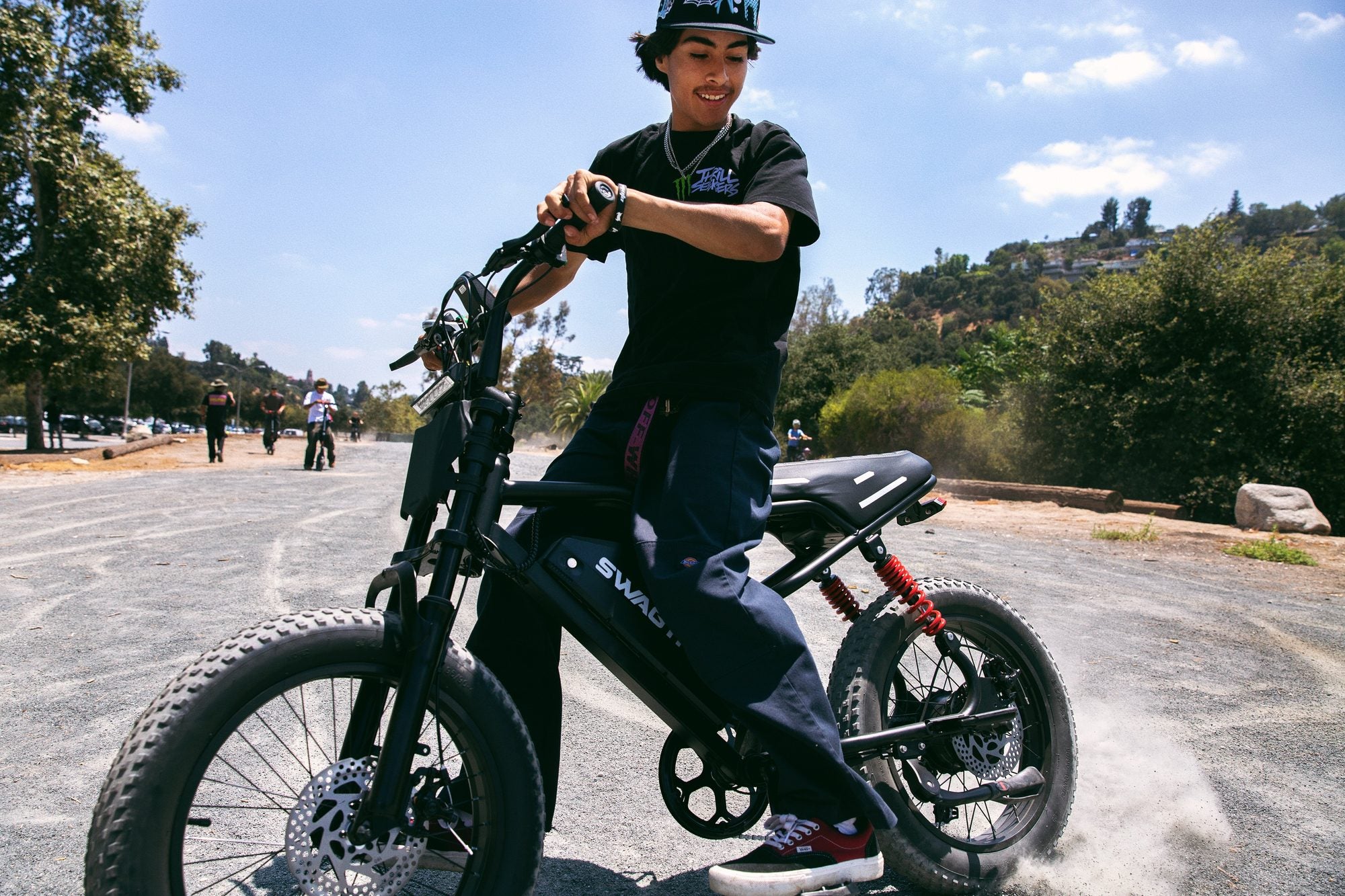
- Maneuvering at low speeds — the slow, tight-turn, traffic-threading riding that defines actual city use — is more confident on a lighter bike.
- Threading it through the building's front door, past the mail wall, into the elevator, out into the hall, into the apartment — every transition is easier.
- Storage — fitting in closets, under stairs, against walls — opens up where the bike can live without a permanent home.
Each one is a small thing. Together, they decide whether the bike actually gets ridden or sits collecting dust.
More than a full day of riding
Lighter doesn't have to mean shorter. The 749 Wh pack delivers a claimed 60+ miles of range — more than a full day of riding from a single charge, with a 6-to-7-hour recharge to top it back up. The bike runs a 750W RMS continuous (1000W peak) rear hub motor and tops out at 28 MPH as a Class 3 e-bike. That's real power and real range in a bike you can still lift onto a rack alone.
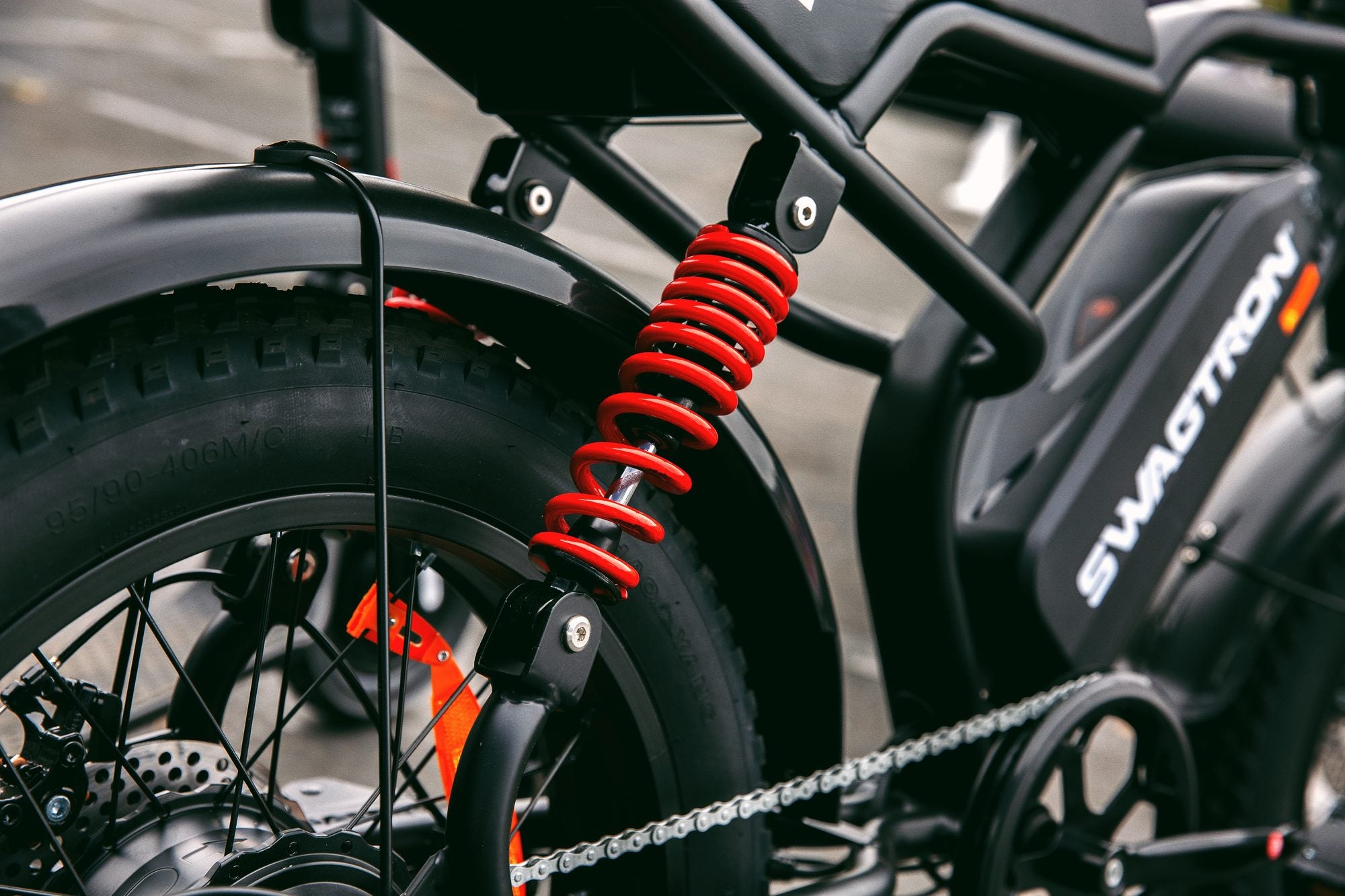
And the ride holds up its end. UrbanCruise carries dual suspension — a front fork plus a rear coil-over in signature red — functionally unique among its active competitors at this price. Pothole season is real; the rear coil-overs turn potholes into a non-event. Hydraulic disc brakes front and rear, a 7-speed drivetrain, a 330-pound payload, an LCD display, integrated LED lights, and cruise control round it out. The look is unmistakable: a caged retro headlight, red coil-over rear shocks, a black bench seat, and a moped-scrambler silhouette, in matte black and red.
On safety, the numbers are stated plainly: the UrbanCruise is UL ANSI 2849 compliant (unit) and UL 2271 compliant (battery).
What to ask before you buy
Shopping for the best fat tire e-bike for apartment living means asking the questions the spec sheet glosses over:
- What's the bike weight with the battery installed? That's the real number. Some brands publish weights without the pack to make the bike sound lighter than it rides.
- What's the wheel size? A 20-inch fat tire e-bike fits elevators, hallways, vehicle racks, and apartment storage that 26-inch wheels do not.
- What's the charge capacity in watt-hours? Volts times amp-hours equals Wh. A 48V 15.6Ah pack delivers about 749 Wh.
- What's the charge-to-weight ratio (Wh per pound)? Higher is better — and weigh it against whether you can actually lift the bike.
- Is it UL compliant? Look for UL ANSI 2849 compliance for the unit and UL 2271 compliance for the lithium-ion battery.
- What's the suspension setup? Fat-tire e-bikes used in cities benefit from real rear suspension. Dual front-and-rear suspension is rare at this price.
The bottom line
Light enough to carry. Charged enough to ride.
Most fat-tire e-bikes force a choice between range and weight. The SWAGTRON UrbanCruise refuses it: 62 pounds — tied-lightest in its class — with 749 Wh of charge, 60+ miles of claimed range, and dual coil-over suspension, all wrapped in a moped-scrambler silhouette built for actual city living.
It fits the elevator. It carries up the stairs. It lifts onto the rack. And it holds enough charge to take a rider more than a full day from the front door.
UL ANSI 2849 compliant · 60+ mile range · 62 lbs · 20-inch fat tires.
Share:
Single Shock vs. Dual Shock: What Fat-Tire E-Bike Riders Actually Feel