

Updated September 29, 2026.
Mostly, yes. Like skateboarding in the 1960s, e-bike riding grew out of freedom, tricks and crews, and it has drawn a similar public backlash. The big difference is speed and weight: e-bikes are faster and heavier than regular bikes, and Class 3 models assist up to 28 mph, so a crash can put other people at risk, not just the rider.
On September 24, 2026, the Christian Science Monitor described teens in Peachtree City, Georgia, riding e-bikes on the town's 120-mile network of shared paths, including popping wheelies, and residents split over it. One told the paper: "One part of me, the old geezer, says to call the cops. The other side of me says, at least they're not in the basement playing video games." Sixty years ago, the same argument was about skateboards.
How is e-bike culture like skateboarding?
E-bike culture and 1960s skateboarding share four traits: they started as youth freedom, grew into a style of tricks, formed crews and drew public backlash.
- It started with freedom. Skateboarding began as a way for kids to get around on their own terms. E-bikes offer the same independence today: a teenager can get to practice or a friend's house without asking for a ride.
- It became a style of tricks. Police in Attleboro, Massachusetts, have warned about teens popping wheelies on e-bikes, noting that "riders often record the stunts to post on social media." Skaters later passed around VHS tapes; e-bike riders share short videos.
- It formed crews. Skateboarding later formed crews such as the Z-Boys of Dogtown in the 1970s. In Australia, videos show "rideouts" of twenty, thirty, even fifty teens cruising together (ABC Religion & Ethics).
- It caused a backlash. The word "skateboards" first appeared in the press in a 1959 Los Angeles Times report about efforts to ban them in Pasadena (Pessimists Archive), and by 1966 cities across the U.S. had begun banning skateboarding (Board Coast). E-bikes now face similar local rules: in California, Carlsbad and other San Diego County cities prohibit riders under 12 from operating Class 2 e-bikes, and a state pilot lets Marin County and its cities bar riders under 16 from Class 2 e-bikes through 2028 (Ebike Oracle; California Assembly analysis of AB 1778).
How is e-bike culture different from skateboarding?
The key difference is speed and weight: e-bikes are faster, heavier and harder to manage than regular bikes, and in May 2026 Orange County District Attorney Todd Spitzer said injuries from e-bikes and e-motorcycles had "spiked 430% in just the last four years in Southern California" (ABC7).
When a skateboarder crashed in 1965, the skateboarder usually got hurt. An e-bike moving at 20 mph or more puts pedestrians and other riders at risk too.
How did skateboarding win acceptance?
Skateboarding went from city bans in the 1960s to an Olympic debut at the Tokyo 2020 Games, held in 2021, by getting safer and finding its own spaces.
| Year | Milestone |
|---|---|
| 1959 | The Los Angeles Times reports on efforts to ban skateboards in Pasadena |
| 1965 | The first skatepark, Surf City, opens in Tucson, Arizona |
| 1966 | Bans spread across U.S. cities |
| 1970s | Polyurethane wheels make boards safer and easier to control |
| 1976 | Carlsbad Skatepark, California's first, opens |
| 2021 | Skateboarding debuts at the Tokyo 2020 Olympics |
Sources: Pessimists Archive, Board Coast, Wikipedia: Skatepark.
E-bike culture is on a similar path, and some pieces are already in place. California law now requires e-bikes sold in the state to have batteries tested to UL 2849 or EN 15194, California's three-class system separates legal e-bikes from e-motorcycles, and the California Highway Patrol offers an online e-bike safety course.
How can riders keep e-bike culture growing?
Riders protect e-bike culture by riding legal bikes, following age and helmet rules, leaving speed limits alone, keeping tricks off public streets, controlling group rides and buying hardware that meets recognized safety standards.
- Ride a real e-bike. A legal e-bike has working pedals, a motor within the legal power limit and a Class 1, 2 or 3 rating. Anything beyond those limits is legally a moped or motorcycle, with license and registration rules.
- Know the age and helmet rules. In California, Class 3 riders must be at least 16, every Class 3 rider must wear a helmet, and riders under 18 must wear a helmet on any class.
- Don't modify the bike for speed. California Vehicle Code 24016 prohibits tampering with an e-bike to change its speed capability unless it still meets the e-bike definition and its class label is updated.
- Practice tricks in the right places. Skateboarders took their tricks to skateparks and private spots. Wheelies belong there too, not in crosswalks.
- Stay in control on group rides. Blocking intersections creates danger and gives critics a reason to push new restrictions.
- Buy safety-compliant hardware. Look for an e-bike that is UL 2849 compliant. Read our UL 2849 buyer's guide to learn what that means.
Where does SWAGTRON fit in?
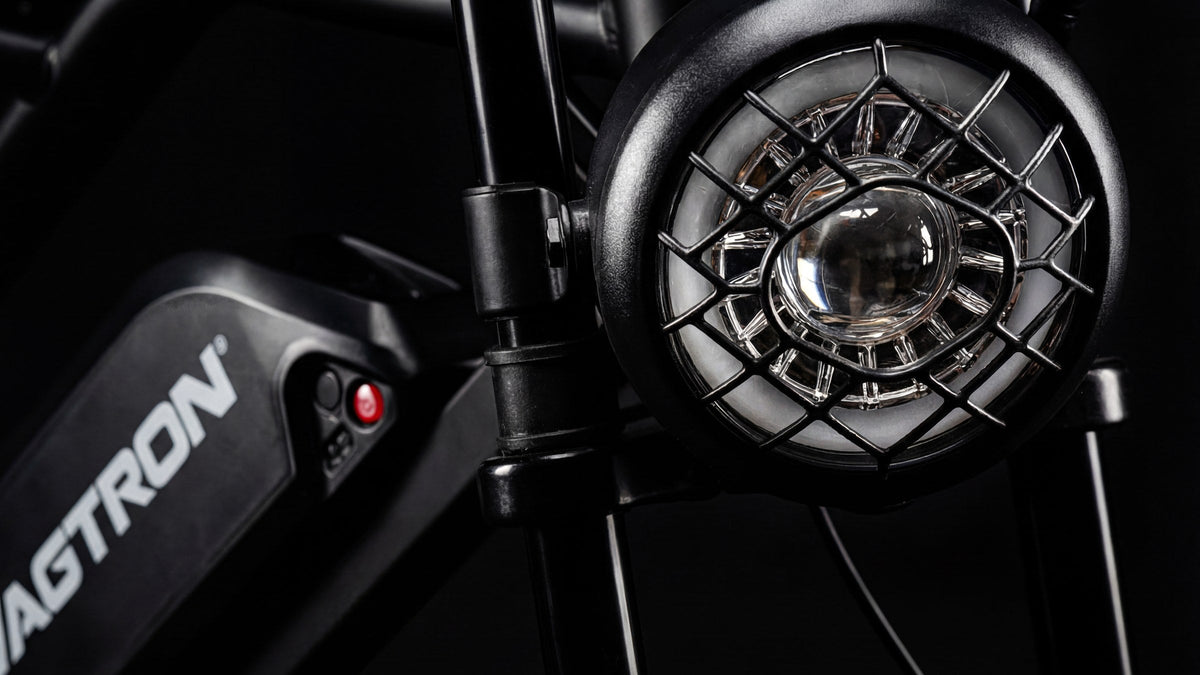
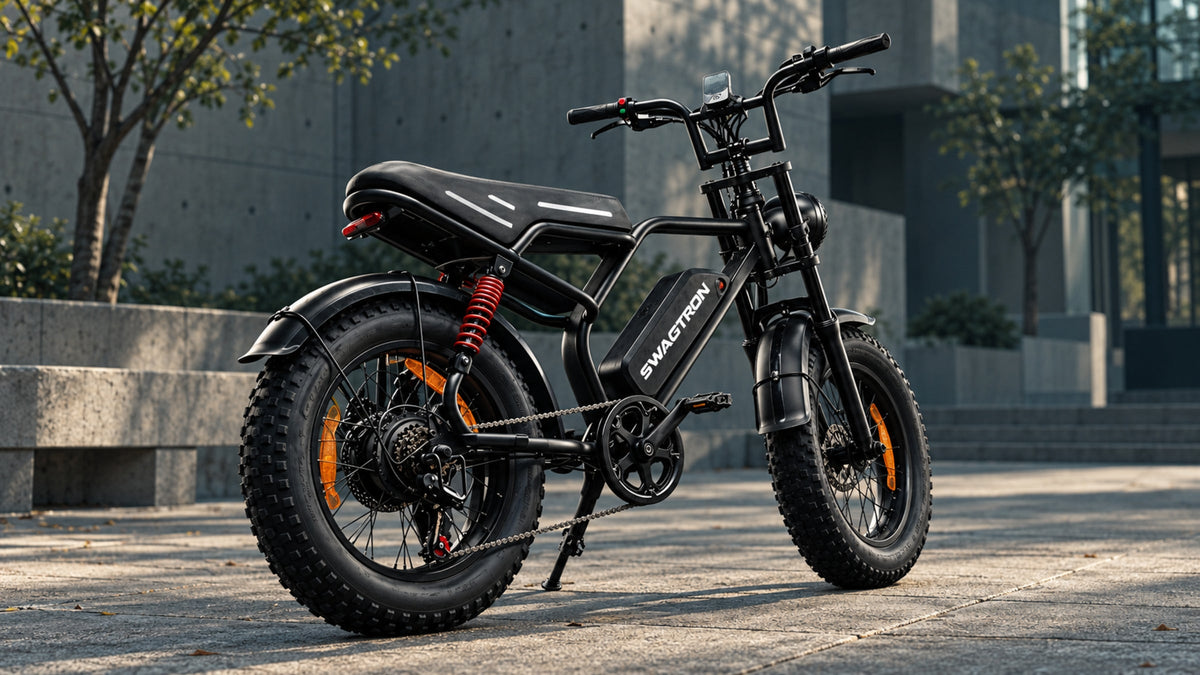
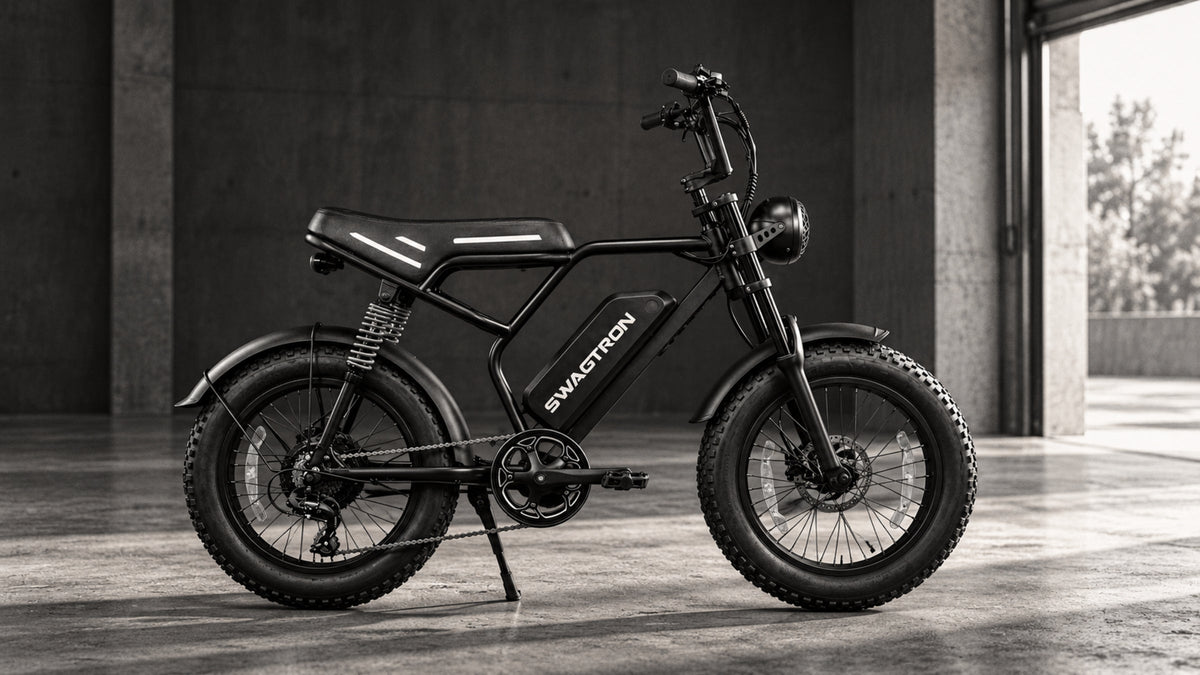
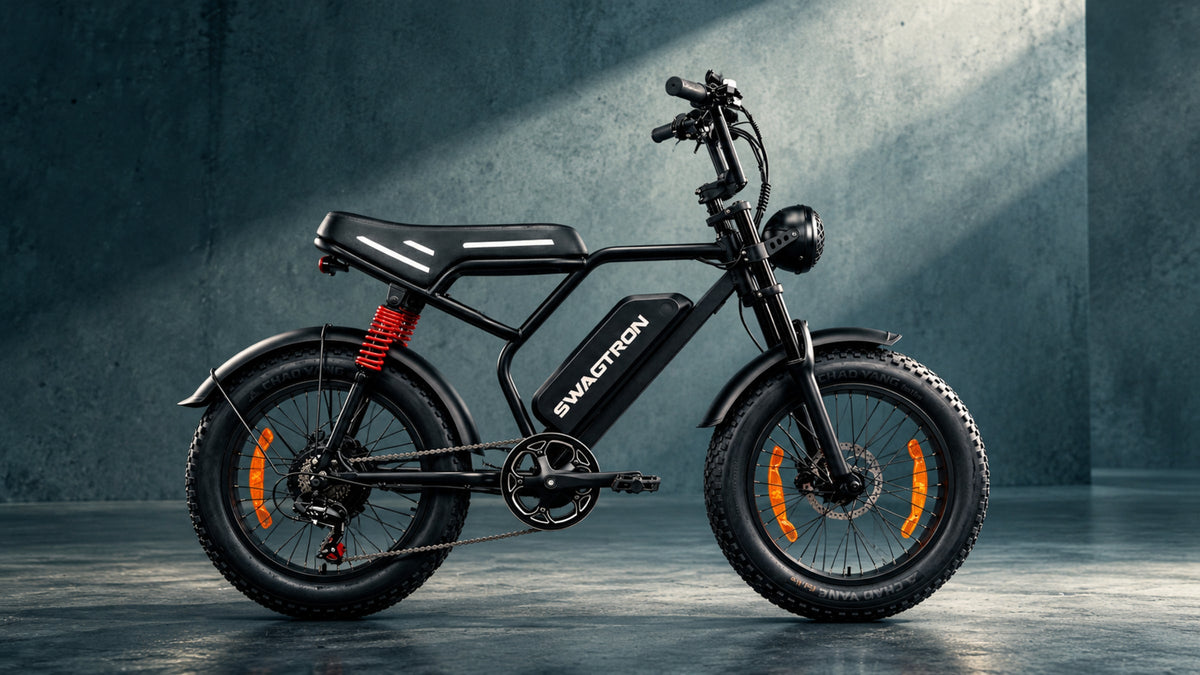
The SWAGTRON UrbanCruise is a Class 3 fat-tire electric bike that pairs a cafe racer design with dual suspension and a 750W (1000W peak) motor, built to stay within the legal 28 MPH Class 3 limit.
We're on the riders' side. The freedom, creativity and community that come with e-bikes are what make this worth building. The UrbanCruise's electrical system is ANSI/CAN/UL 2849 compliant and its battery is ANSI/CAN/UL/ULC 2271 compliant. Like any Class 3 e-bike in California, it's for riders 16 and older, and every rider needs a helmet.
Skateboarding went from being banned by cities to being part of the Olympics. E-bike culture can follow a similar path if riders help build its reputation.
Meet the SWAGTRON UrbanCruise: cafe racer soul, Class 3 pedal assist. See specs
28 MPH pedal assist · 750W (1000W peak) · ANSI/CAN/UL 2849 compliant · Riders 16+ with helmet. Specifications as of September 29, 2026 and subject to change. Laws vary by state and city.
Sources
- Christian Science Monitor: One city thought it had e-bikes all figured out. Not so fast. (Sept 24, 2026)
- Boston Herald via Officer.com: Massachusetts police warn of dangerous teen e-bike stunts
- ABC Religion & Ethics: e-bike subculture in Australia (Aug 2025)
- Pessimists Archive: Skateboarding from nuisance to Olympic
- Board Coast: Skateboard history timeline
- Wikipedia: Skatepark
- Ebike Oracle: California e-bike laws
- California SB 1271 (chaptered text)
- California Assembly Transportation Committee: AB 1778 analysis
- ABC7: OC district attorney on e-bike and e-motorcycle injuries (May 2026)
- California Vehicle Code 21213 · Vehicle Code 24016
- California Highway Patrol: bike and pedestrian safety (e-bike training)
Share:
Class 3 E-Bikes Under $1,500: What to Look For
Is an E-Bike Worth It? What the SWAGTRON UrbanCruise Gets You for $1,299.99