

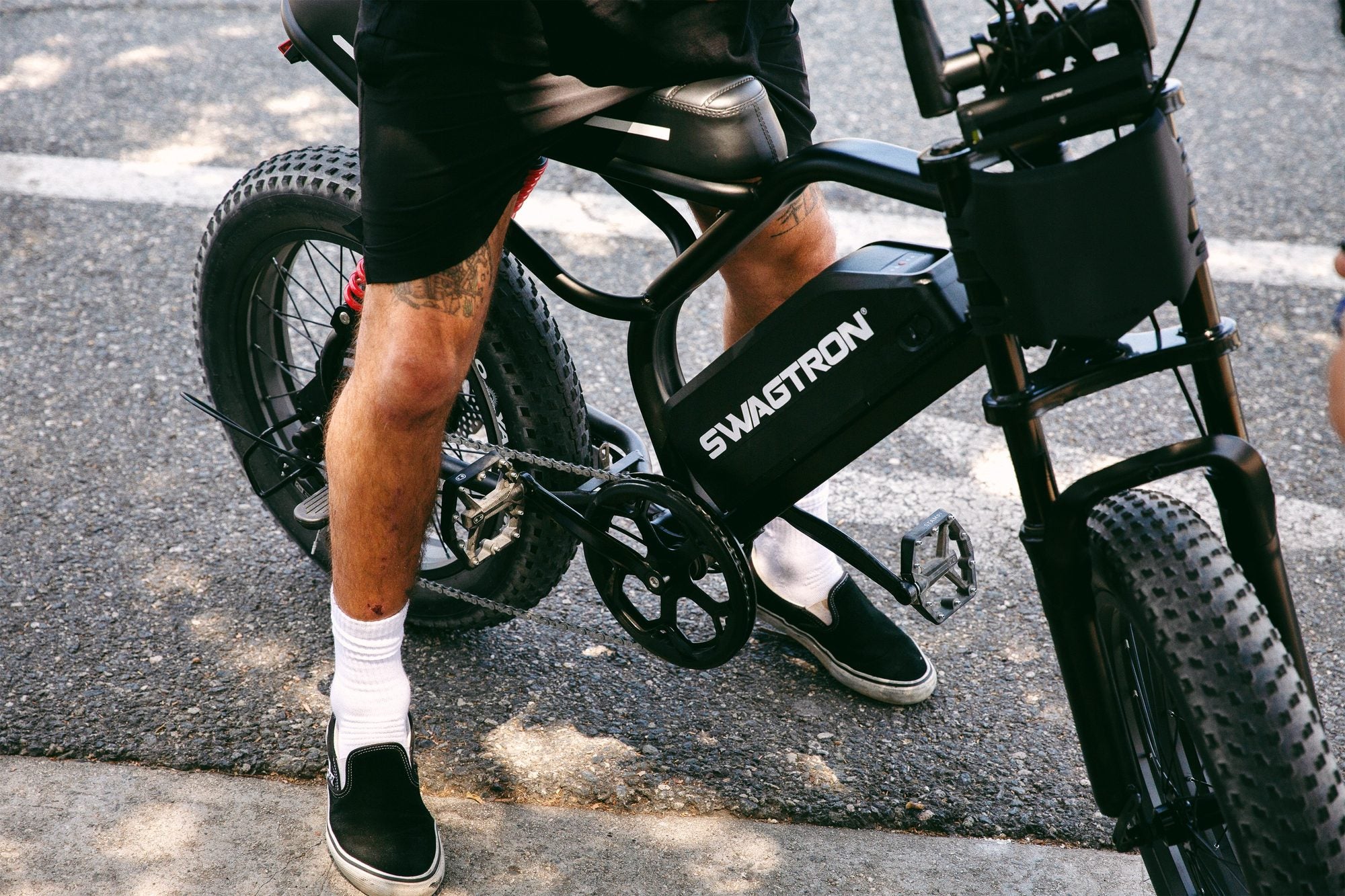
The hoverboard market sorted itself in 2016. The e-bike market is sorting itself now. Pay attention.
If you're shopping for an e-bike in 2026, you've probably noticed a new line in the spec sheets: UL 2849. Most of the major brands now mention it. A growing list of US cities and states require it or are moving toward requiring it. But what is it, and why does it matter for the bike you're about to buy?
UL 2849 is the safety standard for electric bicycles — the entire system, not just the battery. It covers the motor, the electrical system, the wiring, the charger, and how all of those components work together. A bike that meets it has been engineered to a published list of safety thresholds. A bike that doesn't is, at best, untested against the standard the regulatory market is sorting around.
This article explains what the standard covers, why it suddenly matters, what to ask before you buy, and how to read between the lines on a brand's compliance claim.
The hoverboard precedent
The pattern you're watching with e-bikes happened to hoverboards a decade ago. In 2015, hoverboards exploded as a consumer category — first commercially, then literally. Cheap imports flooded the market. By the end of that year, fires had been reported across at least 13 US states. The CPSC opened an investigation. Major retailers stopped carrying the category. UL — the independent safety certification organization — fast-tracked a new standard called UL 2272, specifically for self-balancing scooter electrical systems. By early 2017, the standard was published.
Within eighteen months, the hoverboard category had bifurcated. Brands that met UL 2272 absorbed the surviving customers and distribution channels. Brands that didn't, didn't. The market did not shrink to nothing — it shrank to the brands that had built product to a standard rather than to a margin.
SWAGTRON was a notable survivor of that consolidation. The company designed product to the standard before the standard was a market filter, and watched competitors who had built for low cost rather than safety standard exit the category. That experience is institutional knowledge. The pattern was clear, and it was structural: regulation sorts markets, and the brands sorted out are usually not the ones with the safest products.
UL 2849 is the e-bike analog to UL 2272. The pattern is repeating. The companies that designed e-bikes to meet UL 2849 from the start are positioned to absorb the post-sort market. The companies that did not will have a harder time as more municipalities and states adopt the standard.
What UL 2849 actually covers
UL 2849 is the consensus safety standard for "Electrical Systems for eBikes." It is a comprehensive standard, not a single-component test. The full scope covers:
- The lithium-ion battery pack — including overcharge, over-discharge, short-circuit, thermal-runaway, mechanical-impact, and vibration testing. UL 2271, which you may also see referenced, is the battery-specific sub-standard often integrated into UL 2849 evaluation.
- The motor controller — overcurrent protection, thermal limits, safe failure modes.
- The charger and wiring — insulation, grounding, connector reliability, behavior under fault conditions.
- The interaction between components — how the battery, controller, motor, and charger behave together when something goes wrong.
- Functional safety — including how the bike behaves if a sensor fails, if the throttle sticks, if the battery overheats during a ride.
Critically, UL 2849 evaluates the e-bike as a complete system. A bike with a UL 2271-listed battery cell is not necessarily UL 2849 compliant — the standard is about the whole machine, not one component. This is why brands that publish only "UL 2271 battery" without UL 2849 are publishing an incomplete safety claim. The battery alone passing one test does not certify the system.
The regulatory sorting event
The proximate regulatory force is municipal and state-level e-bike legislation, building over the last several years across the United States. The pattern is recognizable: a category emerges, a wave of incidents follows, regulators write a standard, and the market sorts.
The clearest example is New York City. Local Law 39 of 2023 wrote UL 2849, UL 2272, and UL 2271 directly into the municipal code, making certification a condition of sale, lease, and rental citywide. Note the middle one: UL 2272 is the hoverboard standard from a decade earlier, now sitting in the same statute. The law followed a documented rise in lithium-ion battery fires, concentrated in commercial delivery fleets running cheap uncertified imports.
What happened next is the part worth sitting with. Deaths from e-mobility fires in New York City peaked at 18 in 2023, the year the law passed. By 2025, two years after the standards were written into law, that annual figure had fallen to one. The standard was not a paperwork exercise. It was the difference.
Other US cities are at various stages of similar work, and state-level legislation is in development in multiple states. Where you live may not require UL 2849 today; if the trend continues, it likely will within the next several years. The bike you buy now should meet the standard the regulatory market is sorting around, regardless of whether your specific jurisdiction has codified it yet.
Compliance vs. certification — the distinction matters
You will see brands describe their bikes in two slightly different ways:
- "UL 2849 compliant" — the bike meets the published requirements of the standard.
- "UL 2849 certified" — the bike has been formally tested and listed by an accredited certification body, such as UL itself or another OSHA-recognized Nationally Recognized Testing Laboratory.
The two terms are not interchangeable. Compliance means the bike was designed and built to meet the standard's requirements. Certification means an independent body has verified that compliance through documented testing.
Both are stronger than no claim at all. But when a brand publishes "UL 2849 compliant" without specifying who verified the compliance, ask the follow-up question: who tested it, and where can the test report or certificate be found? A brand operating with rigor will be able to answer that question without hedging. A brand that cannot will hedge, change the subject, or quietly drop the claim from the next version of the spec sheet.
What to ask before you buy
If you are buying an e-bike — especially as more US cities and states move toward UL 2849 enforcement — these are the questions worth asking the brand before you commit:
- Is the bike UL 2849 compliant or UL 2849 certified? Both are stronger than nothing. Certification, with documentation, is stronger.
- Is the lithium-ion battery UL 2271 compliant? UL 2271 is the battery-cell sub-standard. A reputable e-bike brand should be able to cite both standards by number on a single line.
- Where can I see the certificate or test report? A compliant or certified brand should be able to point you to documentation, even if it is a footer note on the product page.
- Was the bike designed to the standard, or retrofitted to meet it? Brands that designed for the standard from the start carry less product-revision risk than brands that adapted in response to regulation. The difference is whether the safety architecture was a prerequisite or a patch.
- Does the brand carry a track record from the previous regulatory cycle? Brands that survived UL 2272 have institutional memory of what a regulatory sort looks like and how to be on the right side of it.
- What happens to my warranty if the standard is updated? UL 2849 is a living standard; revisions will continue. Ask how the brand handles existing-product compliance under future revisions, and what their support obligation looks like if a unit needs to be brought into line with a future version.
These are not adversarial questions. A good brand wants you to ask them. A brand that resists answering them is telling you something.
The brands that built to the standard
Most established direct-to-consumer e-bike brands now carry UL 2849 compliance claims. That is the floor, not a differentiator.
What separates brands beyond that floor is the operational discipline behind the claim. A brand that has watched a previous regulatory sort — and survived it — has built a different kind of institutional muscle than a brand that has only known a pre-sort market. SWAGTRON is one of the brands that survived the hoverboard sort. The UrbanCruise was designed to UL ANSI 2849 compliance from the start, with a UL 2271 compliant battery, and the compliance posture was a prerequisite of the product design rather than a response to the regulation.
Regulation isn't a threat to a company that built the product. It's a sorting mechanism.
That distinction matters. A brand that retrofitted to meet UL 2849 is, by definition, a brand that did not design to it. A brand that designed to it before the regulation arrived has the engineering files, the testing history, the supplier relationships, and the institutional memory to keep meeting the standard as it evolves. The difference is not visible on the product page; it is visible in how the brand operates over a five-year horizon.
The bottom line
The standard is the floor. The standard is the moat.
UL 2849 is not a marketing badge. It is the engineering threshold that determines which e-bike brands will be sold in cities and states that have decided to take e-bike safety seriously. The list of those jurisdictions is growing. The brands on the right side of the standard will absorb the market the brands on the wrong side leave behind.
The SWAGTRON UrbanCruise was designed to UL ANSI 2849 compliance from the start, with a UL 2271 compliant battery, built by a brand with prior survivor experience from the 2015-17 hoverboard sort. That posture is not a claim about the future. It is a record of how the company operates.
UL ANSI 2849 compliant (unit) · UL 2271 compliant (battery) · 60+ mile range · 62 lbs · Capable across all terrains.
Share:
Range vs. Weight: The Trade-Off Most E-Bike Brands Won't Show You
Single Shock vs. Dual Shock: What Fat-Tire E-Bike Riders Actually Feel