

Twenty-eight MPH. Under fifteen hundred. Two numbers, four bikes.
A Class 3 e-bike under 1500 dollars is the sweet spot most buyers actually shop in. Class 3 is the highest legal e-bike speed class in most US states — 28 MPH pedal-assist, with throttle behavior varying by jurisdiction. Plenty of brands sell Class 3 e-bikes above $2,000. The interesting comparison happens below $1,500, where the engineering trade-offs are sharpest, and where four active direct-to-consumer brands ship a bike near the speed-class threshold.
This is a spec-by-spec buyer's guide to those four bikes. What each one wins. What each one trades away to win it. And how to pick the bike that fits your specific ride rather than the one with the loudest marketing.
It is written without the assumption that one bike wins every category. None of them does.
What "Class 3" actually means
The three-class system that most US states use for electric bicycles was developed by PeopleForBikes and adopted into law in over 35 states. It defines:
- Class 1 — Pedal-assist only, up to 20 MPH. No throttle.
- Class 2 — Pedal-assist or throttle, up to 20 MPH. Throttle works without pedaling.
- Class 3 — Pedal-assist only, up to 28 MPH. Throttle, where allowed, limited to 20 MPH.
The Class 3 vs Class 2 e-bike distinction comes down to top speed and how you get there. Class 2 tops out at 20 MPH and lets you ride on throttle alone. Class 3 raises the pedal-assist ceiling to 28 MPH. That gap matters because 28 MPH is the speed at which a 28 mph e-bike actually replaces a short car trip. At 20 MPH, the bike is faster than walking but slower than urban driving. At 28 MPH, the bike matches surface-street car speeds in most US cities. The math on car replacement starts to work seriously at Class 3, which is why this is the tier serious commuters tend to land on.
A note on regulatory context: Class 3 e-bikes are legal on most public roads, but bike-path access varies by city. Some cities allow Class 3 only on roads, not on multi-use paths. Some allow Class 3 access only when the throttle is off. Check your local rules before you commit.
Why the under-$1,500 tier matters
The fat-tire Class 3 e-bike market spans a wide price range. Above $1,500, brands tend to compete on premium fit-and-finish, integrated app experiences, and dealer networks. Below $1,500, the competition is sharper because the engineering decisions are more visible. Every dollar saved on one component shows up in a compromise somewhere else on the spec sheet.
Buyers in this tier are usually one of four people:
- The first-time e-bike buyer who wants the most performance per dollar without spending more than necessary.
- The car-replacement commuter who needs a Class 3 speed to make the math work, and is willing to trade fit-and-finish for the right top-end.
- The casual cruiser or 2-up rider who values comfort and bench seating over raw speed.
- The all-around / adventure rider who wants the bike to do more than commute.
No single bike serves all four equally. The right pick depends on which buyer you are.
The active set
As of April 2026, four active direct-to-consumer brands ship a Class 3 fat-tire e-bike at or near the $1,500 ceiling:
| Brand / Model | MSRP | Promo | Top Speed | Charge (Wh) | Weight | Suspension |
|---|---|---|---|---|---|---|
| Heybike Mars 2.0 | $1,499 | $999 | 32 MPH (off-road unlock) | 624 | 75 lbs | Front + single rear + seatpost |
| Lectric XPeak 2.0 750 | $1,399 | — | 28 MPH | 720 | 73 lbs | Front fork only |
| Ride1Up Cafe Cruiser | $1,595 | $1,395 | 28 MPH | 720 | 65 lbs | Front fork only |
| SWAGTRON UrbanCruise | $1,499.99 | — | 28 MPH | 749 | 62 lbs | Front + dual rear coil-over |
A note on the Heybike Mars 2.0: it reaches its 32 MPH top speed through an off-road unlock rather than shipping at a clean Class 3 setting by default. Some readers will consider this Class 3, others will not. I include it in the comparison because it is widely cross-shopped against the other three. A note on the Ride1Up Cafe Cruiser: its $1,595 MSRP sits just above the ceiling, but its $1,395 promo brings it firmly into the under-$1,500 conversation, so it earns a place here. A note on the SWAGTRON UrbanCruise: it now sells at $1,499.99 — down from its former $1,699.99 retail price — which puts it inside the ceiling outright, so it earns a place here. A note on what is excluded: Lectric also sells an XPeak 2.0 Long-Range with a 960 Wh battery, but at $1,599 with no promotional price below the ceiling, it falls outside this comparison. Competitor spec figures in this article were captured 2026-07-28.
Each bike in the tier wins a different argument.
Where each bike wins
Heybike Mars 2.0 — wins on price. At promo pricing of $999, this is the cheapest entry into the Class 3 fat-tire category. It is also the only bike in this set with both front and rear suspension components, though the rear is a single shock paired with a suspension seatpost rather than a true dual-shock setup. The Mars 2.0 is also a folder, which matters if storage is the binding constraint. Spec ceiling: 624 Wh of charge at 75 lbs (8.3 Wh/lb), 1800W peak, and the off-road speed unlock requires the rider to acknowledge the legal implications.
Lectric XPeak 2.0 750 — wins on price-for-spec. At $1,399 with a 1,310W peak motor and a clean Class 3 ceiling, the XPeak is the most established mass-market value play in this set. It pairs 26×4 fat tires with a front fork. Spec ceiling: 720 Wh of charge at 73 lbs (9.9 Wh/lb), front fork only — no rear suspension.
Ride1Up Cafe Cruiser — wins on 2-up comfort. The Cafe Cruiser is the lightest competitor in this set at 65 lbs and is positioned for 2-up cruising. The 26-inch semi-fat tires (3.0-inch profile, not full 4-inch fat) make it a road-leaning bike rather than a true off-road option. Spec ceiling: 720 Wh of charge at 65 lbs (11.1 Wh/lb), front fork only, no rear suspension (a sprung saddle compensates).
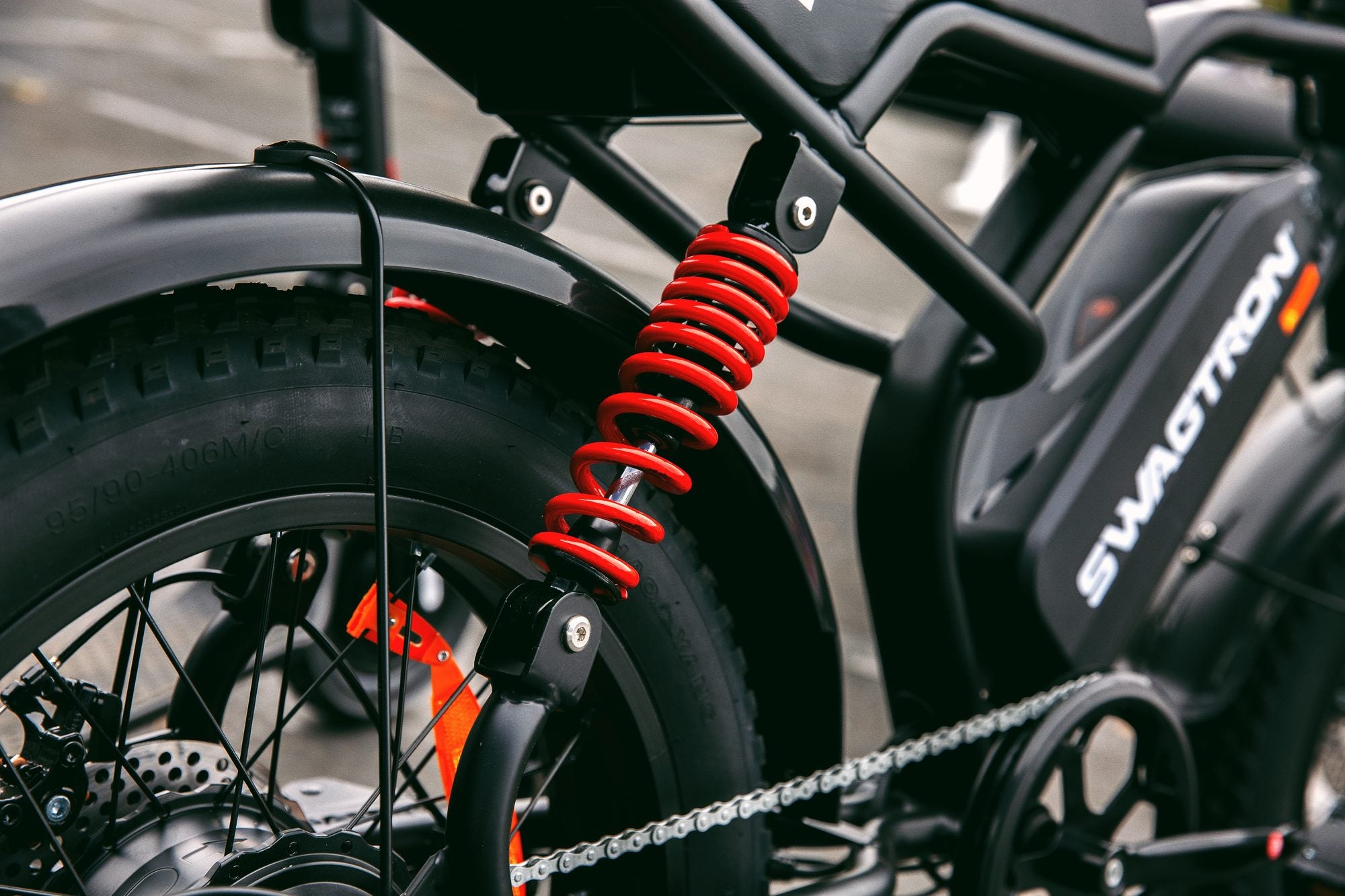
SWAGTRON UrbanCruise — wins on engineering combination. Within this four-bike set, the UrbanCruise carries the most charge — 749 Wh, narrowly ahead of both the Ride1Up Cafe Cruiser and the Lectric XPeak 2.0 at 720 Wh each — at 62 lbs, the lightest weight in the set. That gives it the highest charge-to-weight ratio of the four at 12.1 Wh/lb (versus 11.1 for Ride1Up, 9.9 for Lectric, and 8.3 for Heybike). The margin over Lectric and Ride1Up is 29 Wh, roughly four percent — real, but not a gap to build a purchase decision on by itself. It is also the only bike in the set with dual rear coil-over suspension, and the only one with a moped/scrambler frame style. Spec ceiling: $1,499.99 (down from a former $1,699.99 retail), aluminum alloy frame, front fork plus rear coil-over, 28 MPH Class 3, 750W RMS / 1000W peak, 20"×4" fat tires, hydraulic disc brakes, 7-speed, 330 lb payload, 60+ miles of range, UL ANSI 2849 compliant unit and UL 2271 compliant battery.
What each bike trades
Every bike in this tier makes a trade-off to hit the price ceiling. Here is what each one gives up:
- Heybike Mars 2.0 trades raw spec for low price. The 624 Wh battery is the smallest in the set; the 75 lb weight is the heaviest. The folding mechanism adds a hinge to the frame, which adds a maintenance point. The 32 MPH off-road speed unlock requires user opt-in, which clouds the bike's effective Class 3 status.
- Lectric XPeak 2.0 trades suspension for price. No rear suspension means every impact above the fat-tire compliance threshold goes into the seatpost. The XPeak is a hardtail in a category where rear shocks would meaningfully improve ride quality.
- Ride1Up Cafe Cruiser trades fat-tire capability for cruiser comfort. The 26×3 semi-fat tires roll faster on pavement than full 4-inch fat tires, but they handle gravel, sand, and broken pavement less confidently. The Cafe Cruiser is a pavement-first bike with off-road grace as an afterthought.
- SWAGTRON UrbanCruise trades peak motor wattage for the rest of the package. The 1000W peak is the lowest peak figure in this set. UrbanCruise is built for sustained efficiency rather than maximum burst, which suits the 60+ mile range claim and the 28 MPH ceiling but does not win a watt-vs-watt drag race against the Heybike Mars 2.0's 1800W peak.
How to pick
If you are a first-time e-bike buyer focused on lowest cost and the off-road speed unlock isn't a concern, the Heybike Mars 2.0 at $999 promo is the cheapest entry and includes folding capability.
If you are a commuter who wants a clean Class 3 speed at the lowest price, the Lectric XPeak 2.0 750 at $1,399 is the most established mass-market value with a full Class 3 ceiling and a 1,310W peak motor.
If you are a casual rider who values 2-up cruising and pavement-first comfort over off-road capability, the Ride1Up Cafe Cruiser at $1,395 promo is the most comfortable choice in this set.
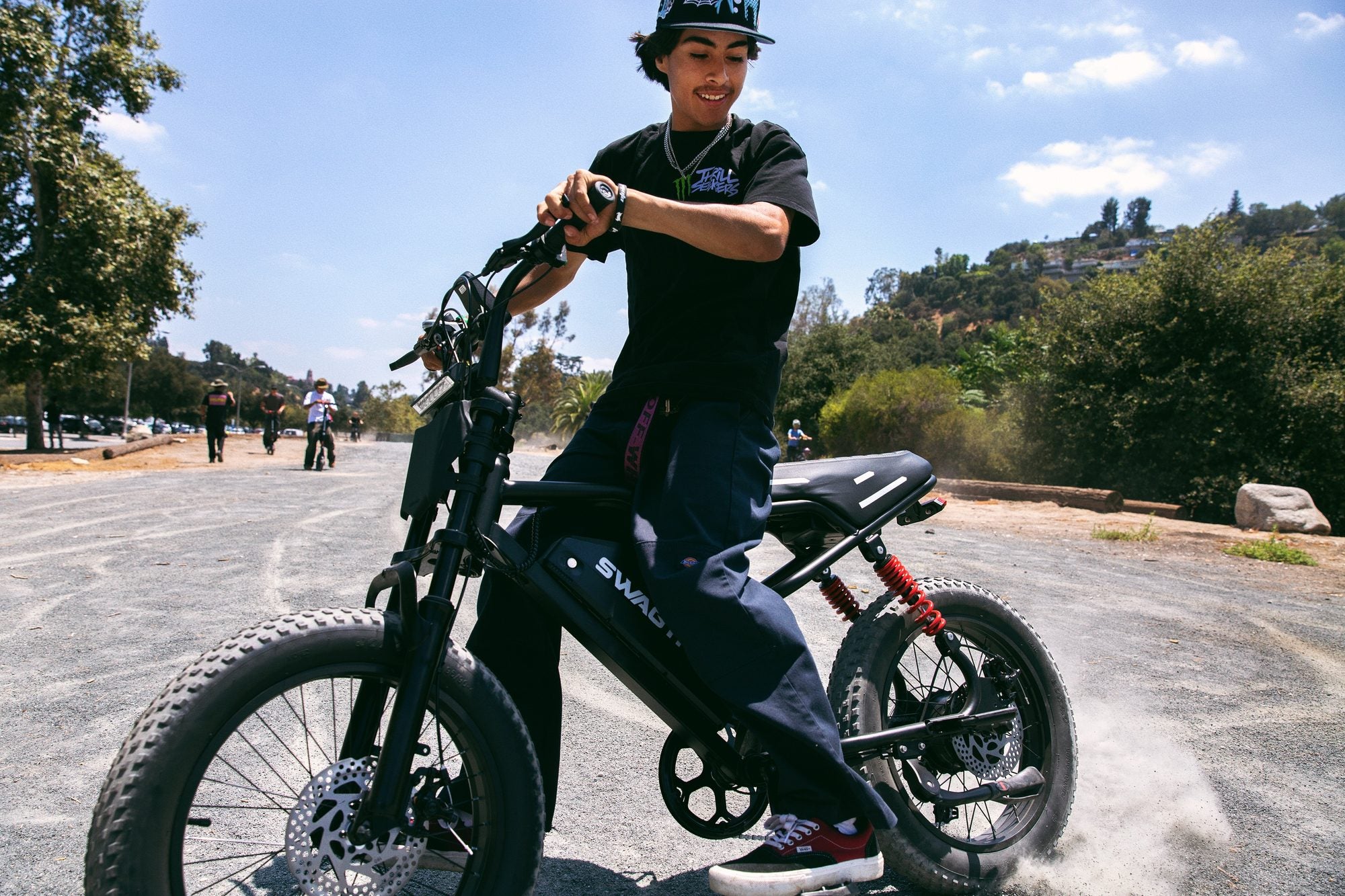
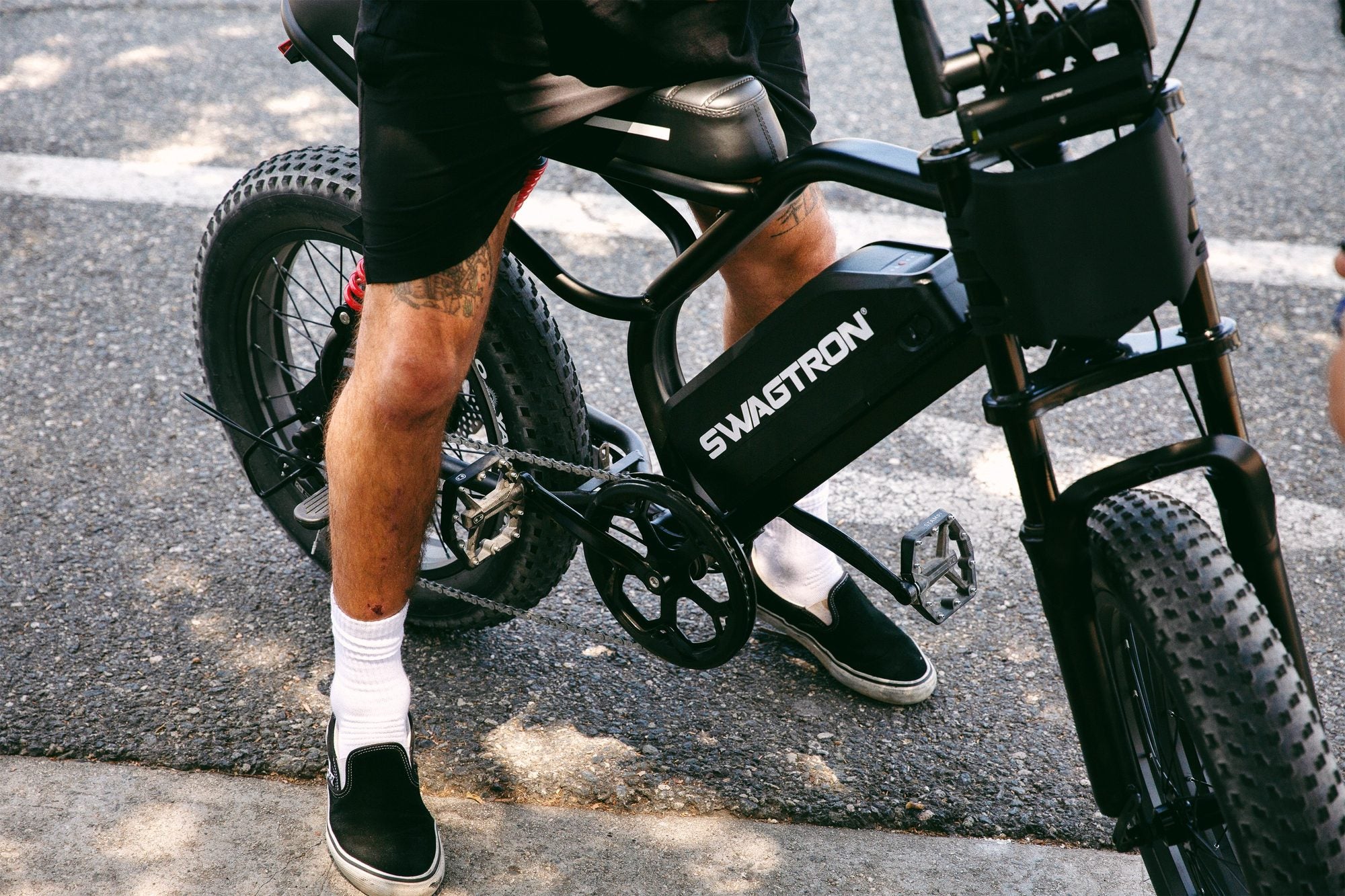
If you are an all-around rider who wants the highest charge-to-weight ratio in the set, the lightest bike for elevators and stairs, dual rear suspension for real city surfaces, and a moped/scrambler silhouette that signals what the bike actually does, the SWAGTRON UrbanCruise is the engineering choice in this tier.
Pick the bike that wins your argument.
What to ask before you buy
Across all four bikes, these are the spec questions worth asking the brand before you commit:
- What is the actual top speed at delivery, and what unlock (if any) is required for Class 3? A bike that ships below Class 3 with an unlock is a different bike from one that ships at a clean 28 MPH.
- Is the bike UL 2849 compliant, and is the battery UL 2271 compliant? If a brand can't produce documentation, that is a flag.
- What is the battery capacity in Wh, and what is the Wh/lb ratio? This points to real-world range and bike livability at the same time.
- What is the suspension setup? Hardtail, single rear shock, suspension seatpost, dual rear coil-over — they ride differently. Match the answer to the surfaces you will actually ride.
- What is the warranty length and what does it cover? Battery capacity warranties matter more than frame warranties; lithium-ion cells fade with use.
- What is the dealer / service network, or does the brand support service-by-mail only? This matters in year three more than year one.
The bottom line
The category is sorting itself. The bikes that make the cut are starting to be visible.
The best Class 3 e-bike under $1,500 depends on which argument you are trying to win. Four brands ship into this tier today. Each one wins a specific argument. None of them wins all of them.
Within this four-bike set, the SWAGTRON UrbanCruise wins the engineering combination — the highest charge-to-weight ratio of the four (12.1 Wh/lb), the lightest bike in the set (62 lbs), the only dual rear coil-over suspension, a moped/scrambler silhouette, and UL ANSI 2849 compliant unit and UL 2271 compliant battery. For the all-around rider in the under-$1,500 Class 3 tier, that combination is hard to match.
For the buyer optimizing for one specific axis — lowest price, mass-market familiarity, 2-up cruising — one of the other three may be the right answer. The honest version of this guide says so.
Pick the bike that wins your argument.
28 MPH Class 3 · 749 Wh of charge · 62 lbs · 12.1 Wh/lb · Front fork + dual rear coil-over · UL ANSI 2849 compliant unit · UL 2271 compliant battery.
Share:
Range vs. Weight: The Trade-Off Most E-Bike Brands Won't Show You